
The January 22, 2026 Jack Smith Hearing: A Study in Oversight Failure
On January 22, 2026, the House Judiciary Committee held a hearing that was presented as oversight. Former Special Counsel Jack Smith appeared publicly for the first time to answer questions about his investigations into President Donald Trump. What followed was not oversight. It was a documented departure from traditional oversight practices.
1/23/20268 min read
The January 22, 2026 Jack Smith Hearing: A Study in Oversight Failure
I. What We Witnessed
On January 22, 2026, the House Judiciary Committee held a hearing that was presented as oversight. Former Special Counsel Jack Smith appeared publicly for the first time to answer questions about his investigations into President Donald Trump.
What followed was not oversight. It was a documented departure from traditional oversight practices.
Republican members of the committee did not examine evidence. They did not question the findings of a two-year investigation that concluded the President committed crimes. They did not grapple with the documented facts of January 6, 2021.
Instead, they attacked the investigator. Chairman Jim Jordan declared the investigation was "always about politics" without presenting evidence. Rep. Darrell Issa accused Smith of being the "arm" of Biden's political enemies. Rep. Troy Nehls told police officers who were beaten defending the Capitol that the fault for January 6 "does not lie with Donald Trump."
One of those officers, Michael Fanone, who suffered a heart attack and traumatic brain injury while being dragged into the mob, responded to Nehls with two words: "Go f**k yourself."
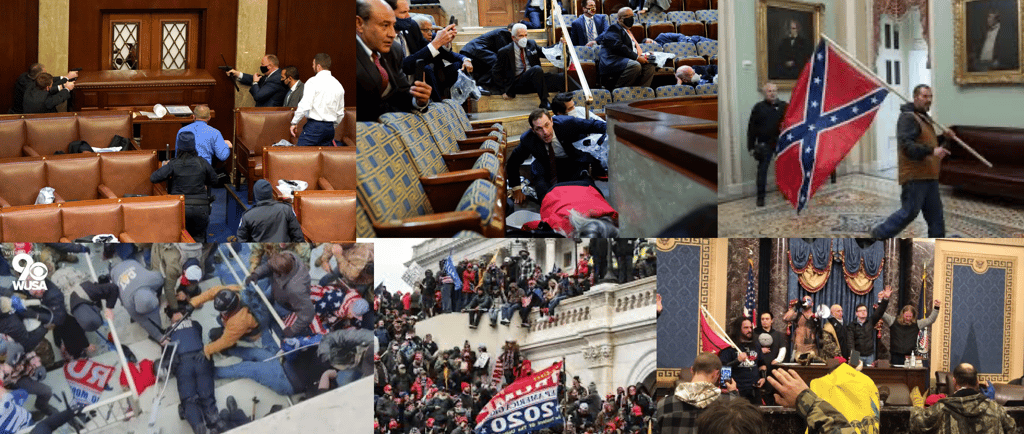
That exchange captured something essential. Members of Congress who condemned January 6 when it happened now defend the man who caused it. They know what they witnessed. They said so at the time. The record is clear.
This article documents that record.
II. The Oath They Swore
Every member of Congress takes the same oath:
"I do solemnly swear that I will support and defend the Constitution of the United States against all enemies, foreign and domestic; that I will bear true faith and allegiance to the same."
That oath does not include exceptions for party loyalty. It does not include exceptions for political pressure. It does not include exceptions for presidential threats.
Supporting and defending the Constitution means performing oversight of executive power. It means investigating when evidence of abuse exists. It means holding the powerful accountable, including members of your own party.
The framers placed this duty in the legislature by design. James Madison warned that the executive is the branch most prone to abuse and must be restrained. The Constitution assigns Congress the power to investigate, subpoena, and impeach precisely because the founders understood that no person should be above the law.
The January 22 hearing tested whether that principle still holds.
III. What They Said After January 6
In the hours and days after the attack on the Capitol, Republicans condemned what happened. Their statements were unequivocal. The record is documented.
Jim Jordan (R-OH), Chairman of the House Judiciary Committee:
On January 6, 2021, Jordan tweeted: "Stop the violence. Support Capitol Police."
That same day, he issued a statement: "Americans support peaceful protests, First Amendment activity, and the men and women of law enforcement. What happened today is wrong and is not what America is about."
Days later on Fox News, Jordan said: "What happened last week was terrible, it was tragic, it's as wrong as wrong can be… Republicans, we know all political violence is wrong, all the time. We condemned it last summer, we condemned it last week."
What the record also shows: Jordan spoke with President Trump by phone for ten minutes on the morning of January 6. He texted White House Chief of Staff Mark Meadows a legal strategy for Vice President Pence to overturn the election results. He refused to cooperate with the January 6 Select Committee's investigation.
At the January 22, 2026 hearing, Jordan declared that the investigation into Trump's conduct was "always about politics."
Troy Nehls (R-TX), member of the House Judiciary Committee:
On January 6, 2021, Nehls was photographed helping Capitol Police barricade the door to the House chamber as rioters attempted to breach it. The image was published nationwide.
That day, Nehls tweeted: "Violence is NEVER the answer. Law and order!"
He later recounted telling rioters through broken glass: "This is un-American, and this isn't the way we should conduct ourselves."
What the record also shows: That same night, after the Capitol was secured, Nehls voted to object to the certification of electoral votes in Arizona and Pennsylvania. Days later, he voted against impeachment.
At the January 22, 2026 hearing, Nehls addressed the police officers in attendance and told them: "I can tell you, Gentlemen, that the fault does not lie with Donald Trump." He blamed Capitol Police leadership instead.
Fanone, who nearly died defending the building Nehls stood in, told him to go f**k himself.
Darrell Issa (R-CA), senior member of the House Judiciary Committee:
On January 6, 2021, Issa "immediately condemned the rioting at the Capitol," according to contemporaneous reporting.
In May 2021, Issa voted against creating an independent commission to investigate January 6, claiming essential questions had already been "asked and answered."
On the one-year anniversary of January 6, 2022, Issa issued a statement that mentioned the attack only as a prelude to criticizing the Biden administration for inflation, immigration, and Afghanistan. He called it "a difficult day to be in the Capitol" before pivoting to partisan attacks.
At the January 22, 2026 hearing, Issa accused Smith of being like "the president's men for Richard Nixon" who "went after your political enemies." He asked Smith: "They were the enemies of the president. And you were their arm, weren't you?"
Smith's answer: "No."
Issa concluded his questioning with: "I yield back, in disgust of this witness."
Kevin McCarthy (R-CA), former House Speaker:
On January 6, 2021, McCarthy had a screaming match with Trump by phone while the Capitol was under attack. According to multiple sources and contemporaneous accounts, McCarthy told Trump the rioters were "trying to f***ing kill me."
On January 13, 2021, McCarthy said on the House floor: "The President bears responsibility for Wednesday's attack on Congress by mob rioters. He should have immediately denounced the mob when he saw what was unfolding."
Audio recordings later revealed that on January 10, 2021, McCarthy told Republican leadership he planned to recommend that Trump resign. "That would be my recommendation," McCarthy said to Rep. Liz Cheney. "I don't think he will take it, but I don't know."
McCarthy told colleagues that Trump had admitted "some responsibility" for the attack in private conversations.
Within weeks, McCarthy flew to Mar-a-Lago to meet with Trump. The photo of the two men together signaled that the Republican Party would not hold Trump accountable. McCarthy later denied ever recommending resignation, until the audio was published and proved otherwise.
McCarthy gave Tucker Carlson exclusive access to January 6 security footage, which Carlson used to downplay the violence.
IV. What They Did Instead
Ten House Republicans voted to impeach Trump for incitement of insurrection on January 13, 2021. It was the most bipartisan presidential impeachment in American history.
Within two years, eight of those ten were gone. Four retired rather than face Trump-backed primary challengers. Four lost their primaries to candidates endorsed by the man they held accountable.
Liz Cheney, the third-ranking House Republican who called Trump's conduct "the greatest betrayal" by any American president, lost her Wyoming primary to Harriet Hageman, a Trump-endorsed candidate.
Hageman now sits on the House Judiciary Committee. She was in the room during the January 22, 2026 hearing, part of the majority attacking the prosecutor who investigated the attack Cheney sacrificed her career to expose.
The Senate voted to acquit, 43 to 57, with only seven Republicans joining all Democrats to convict, still short of the two-thirds required.
Every Subsequent Effort at Accountability Has Been Blocked:
Independent Commission: When the House considered an independent commission to investigate January 6, 35 Republicans joined Democrats in the House to support it. Senate Republicans filibustered it.
Select Committee Subpoenas: When the House January 6 Select Committee subpoenaed evidence, Trump allies refused to comply. Some were held in contempt. The Justice Department declined to prosecute most of them.
DHS Secretary Impeachment: When articles of impeachment were introduced against DHS Secretary Kristi Noem for obstruction of oversight and constitutional violations, they were buried by Republican leadership.
Oversight Committee Actions: When Rep. Ayanna Pressley moved to subpoena DHS records related to the killing of a U.S. citizen by federal agents, every Republican on the House Oversight Committee voted against it.
The pattern is documented and consistent. Every opportunity for oversight has been declined.
V. The Hearing as Evidence
The January 22, 2026 hearing was not designed to examine evidence. It was designed to attack the investigator.
Jack Smith testified that his investigation "revealed that Donald Trump is the person who caused Jan. 6, that it was foreseeable to him and that he sought to exploit the violence."
He stated: "We followed the facts and we followed the law. Where that led us was to an indictment of an unprecedented criminal scheme to block the peaceful transfer of power."
He affirmed that his team had gathered "proof beyond a reasonable doubt" of criminal conduct and that he would prosecute the same case today regardless of the defendant's party affiliation.
Republican members did not challenge this evidence. They did not present alternative facts. They did not argue that Trump's conduct was legal or constitutional.
Instead, they complained about subpoenas for phone records. They accused Smith of being politically motivated without evidence. They attacked his character rather than his findings.
Chairman Jordan controlled the hearing to suppress substantive discussion of evidence. Democrats complained that Smith was cut off mid-answer. Republicans avoided any question that might require them to address the documented facts of January 6.
This was not oversight. This was the opposite of oversight.
VI. The Constitutional Framework
Oversight did not fail because Congress lacks power.
Oversight failed because Congress chose not to use it.
The House Judiciary Committee has the authority to investigate. They chose to attack the investigator instead.
The House has the authority to impeach. They buried the articles instead.
The Constitution provides remedies. Congress declined to employ them.
When this happens, the Constitution does not self-correct. Courts move slowly, if they act at all. The system of checks and balances depends on each branch performing its constitutional duty.
When one branch abdicates that duty, the system breaks.
The founders warned explicitly about this failure. They designed institutional mechanisms that depend on officials honoring their oaths. When those oaths become subordinate to partisan loyalty, the constitutional framework cannot function as intended.
VII. The Documented Record
The members of the House Judiciary Committee who attacked Jack Smith on January 22, 2026 knew what happened on January 6, 2021.
They said so at the time.
Jim Jordan called it "wrong" and "as wrong as wrong can be."
Troy Nehls called it "un-American" while barricading the door against rioters.
Darrell Issa "immediately condemned the rioting."
Kevin McCarthy said Trump "bears responsibility."
They knew. They condemned. They reversed.
This was not a failure of knowledge. It was a documented reversal of position.
A reversal that prioritized party over oath. A reversal that protected power over principle. A reversal that attacked the prosecutor rather than addressed the evidence.
The January 22 hearing did not prove Jack Smith wrong. It documented that the members questioning him have abandoned traditional oversight practices.
When documented statements can be reversed without institutional consequence, when the same members who condemned an attack now defend its cause, constitutional governance becomes performance rather than practice.
VIII. What Constitutional Documentation Provides
The constitutional remedy for a president who commits crimes is impeachment.
The constitutional remedy for members of Congress who abandon their oaths is informed civic participation.
This is why constitutional documentation matters. The permanent public record ensures that:
Statements made on January 6, 2021 are preserved
Statements made on January 22, 2026 are preserved
The contradiction between them is documented
The pattern of oversight declined is recorded
Citizens have access to verified facts when making civic decisions
When congressional oversight fails, informed citizenship becomes essential.
The January 22 hearing documented institutional failure in public, on the record, with video evidence.
The members who conducted it represent districts. Those districts include citizens who expect their representatives to honor constitutional oaths.
Constitutional documentation ensures that when citizens evaluate their representatives' conduct, the factual record is complete, accurate, and permanently accessible.
Support Constitutional Documentation
Fund Documentation Infrastructure →
Sources
All statements attributed to members of Congress are documented in contemporaneous news reports, official transcripts, video recordings, and published audio.
Key sources include: C-SPAN, CNN, NPR, CBS News, ABC News, PBS, The Washington Post, official congressional records, House Judiciary Committee hearing transcript (January 22, 2026).
Last updated: January 25, 2026
CONSTITUTIONAL ACCOUNTABILITY NOW
CAN2026.org is an independent, nonpartisan public-accountability initiative documenting elected officials, candidates, elections, campaign finance, government actions, and constitutional oversight through verified public records. Contact: info@CAN2026.org
© 2026 CAN2026.org. All rights reserved.
Home | About | Government Record | Federal Agencies| U.S. Congress | FAQs | Funding | Contact Us | Privacy Policy Terms of Use
© 2026 Constitutional Accountability Now. All rights reserved.