
50 of 53 Republican Senators Failed to Exercise Constitutional War Powers Authority
Why a War Powers Vote Should Have Been Bipartisan
1/22/20265 min read
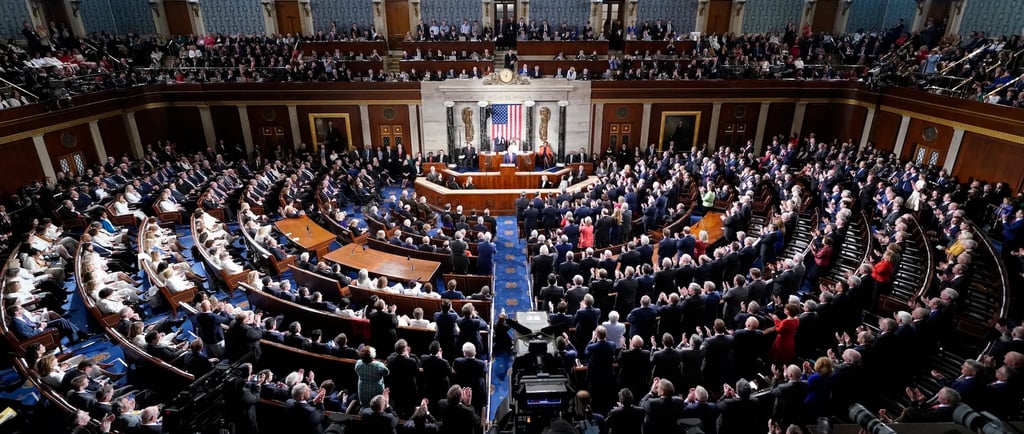
50 of 53 Republican Senators Failed to Exercise Constitutional War Powers Authority
Why a War Powers Vote Should Have Been Bipartisan
Fifty Republican senators voted against exercising Congress's explicit constitutional authority over the use of military force.
There was no policy ambiguity. There was no constitutional uncertainty. There was no legitimate discretion involved.
The United States Senate was asked whether Congress would enforce its constitutional authority over military action. The constitutional answer was clear.
This vote should have been bipartisan.
Instead, fifty Republican senators voted against asserting congressional war powers authority.
Only three Republican senators voted to preserve Congress's constitutional role:
Senator Rand Paul of Kentucky
Senator Susan Collins of Maine
Senator Lisa Murkowski of Alaska
These three voted to maintain congressional authority over war powers.
The remaining fifty voted to defer that authority to the executive branch.
What followed was not a policy disagreement. It was a documented departure from constitutional structure.
Founders' Intent: Why Congress Holds the War Power
The framers of the Constitution were explicit about where the power to initiate and oversee military action must reside.
James Madison warned that the executive is the branch most prone to war and therefore must be restrained from unilaterally committing the nation to conflict. Even Alexander Hamilton, often cited as a defender of strong executive authority, acknowledged that the president's role was limited to command only after Congress had authorized military action.
The Founders placed war powers in the legislature by design. They understood that democratic accountability collapses when one person controls decisions of war.
This vote tested whether senators would honor that design.
The Oath They Swore
Every United States senator swears the same oath:
"I do solemnly swear that I will support and defend the Constitution of the United States against all enemies, foreign and domestic; that I will bear true faith and allegiance to the same."
That oath does not include exceptions for party. It does not include exceptions for political pressure. It does not include exceptions for presidential threats.
Supporting and defending the Constitution means defending its structure. That structure places war powers in Congress.
What the Constitution Requires
Article I of the Constitution grants Congress the power to declare war and to oversee the use of military force. This authority was debated extensively during the Constitutional Convention and intentionally withheld from the executive branch.
The purpose was clear: No single person should have the power to commit the nation to war.
When military action occurs without explicit congressional authorization, Congress has constitutional authority to intervene.
Failing to act is not neutrality. It is a departure from constitutional design.
What the Senate Did
In January 2026, the Senate considered a war powers resolution requiring congressional authorization for further U.S. military action related to Venezuela.
The resolution did not prohibit defense. It did not mandate withdrawal. It simply asserted Congress's constitutional role.
The Two Votes:
On the initial procedural vote (January 8, 2026), five Republican senators voted with the Democratic caucus to advance the resolution. Among them were Senator Josh Hawley of Missouri and Senator Todd Young of Indiana.
At that moment, the constitutional framework was clear. They recognized it. They acted on it.
Then the White House intervened.
On the final vote (January 14, 2026), following direct pressure from President Trump and his administration, Hawley and Young reversed their positions. Their reversals collapsed what should have been a successful assertion of congressional authority into a 50 to 50 tie.
The Vice President cast the tie-breaking vote to block the resolution.
Congress declined to exercise the authority the Constitution assigns to it.
Why This Represents Constitutional Failure
This outcome was not the result of confusion or haste.
It was documented and deliberate.
Hawley and Young did not misunderstand their constitutional authority. They did not lack constitutional clarity. They did not oppose congressional war powers in principle.
They initially voted to uphold them.
Their later reversal was a documented decision to abandon that position under political pressure. That sequence matters. It transforms this outcome from uncertainty into documented reversal.
When senators first vote to defend constitutional structure and then reverse course after executive pressure, the pattern is clear and verifiable.
This was not a failure of knowledge. This was a failure of institutional independence.
The Documented Pattern
This vote fits a broader documented pattern of congressional deference to executive authority:
Historical Context:
War Powers Resolution of 1973: Passed over presidential veto to reassert congressional authority. Rarely enforced since.
Authorization for Use of Military Force (2001): Passed after 9/11 for operations against those responsible. Subsequently invoked to justify military actions in countries and against groups that did not exist in 2001.
Libya (2011): Military action continued beyond 60-day War Powers Resolution deadline without congressional authorization.
Syria (2013-present): Sustained military operations without formal congressional authorization.
Yemen (2015-2019): Multiple attempts to invoke War Powers Resolution. Senate passed resolutions; presidential vetoes sustained.
The Venezuela vote (2026): Senate declines to assert authority even when resolution advances to final vote.
The pattern shows consistent congressional deference to executive military decisions, regardless of constitutional framework.
What Constitutional Oversight Requires
The Constitution does not make war powers enforcement optional. It assigns this authority to Congress explicitly.
When Congress declines to exercise constitutional authority:
The separation of powers weakens
Executive power expands without institutional check
Constitutional structure gives way to political calculation
Historical precedent compounds future deference
The framers anticipated this risk. They designed the system to require institutional jealousy—each branch defending its own authority. When that defense fails, the system cannot self-correct.
Courts often decline to intervene in war powers disputes, citing political question doctrine.
If Congress won't assert its authority, and courts won't compel it, the constitutional check disappears.
The Educational Purpose of Documentation
This is why constitutional documentation matters.
When institutional failures occur:
The specific votes must be recorded
The reversal pattern must be documented
The constitutional framework must be explained
The historical context must be preserved
Informed citizenship requires access to these facts.
Citizens who understand:
What the Constitution requires
Who voted how and when
What changed between votes
What pressure was applied
...can make informed decisions about whether their representatives are honoring constitutional structure.
Constitutional documentation ensures this record remains complete, accurate, and permanently accessible.
The Senate Vote Record
January 8, 2026 - Motion to Discharge (Vote 5):
Yes: 52 (47 Democrats + 5 Republicans)
No: 47 (47 Republicans)
Republicans voting Yes:
Rand Paul (KY)
Susan Collins (ME)
Lisa Murkowski (AK)
Josh Hawley (MO)
Todd Young (IN)
January 14, 2026 - Point of Order (Vote 9):
Sustained: 51 (50 Republicans + Vice President tiebreaker)
Not Sustained: 50 (47 Democrats + 3 Republicans)
Republicans voting to preserve congressional authority:
Rand Paul (KY)
Susan Collins (ME)
Lisa Murkowski (AK)
Republicans who reversed positions:
Josh Hawley (MO)
Todd Young (IN)
Vice President J.D. Vance cast the tie-breaking vote to block the resolution.
What This Vote Documents
Fifty Republican senators voted against exercising congressional war powers authority.
The vote was not about Venezuela policy.
The vote was about whether Congress would assert its constitutional role in military decisions.
The Constitution assigns this authority to Congress. Fifty senators voted to defer it to the executive.
This is a documented fact, not a political opinion.
When citizens evaluate whether their senators are honoring constitutional structure, this vote is part of the permanent record.
Constitutional documentation ensures the record is complete.
Support Constitutional Documentation
Fund Documentation Infrastructure →
Sources
Senate Roll Call Votes: Senate.gov, Vote 5 (January 8, 2026), Vote 9 (January 14, 2026)
Congressional Record: Official transcripts of Senate proceedings
Constitutional Framework: U.S. Constitution Article I, War Powers Resolution (1973)
Reporting: Reuters, Associated Press, New York Times, Washington Post, Roll Call
Historical Context: Congressional Research Service reports on war powers
Last updated: January 25, 2026
CONSTITUTIONAL ACCOUNTABILITY NOW
CAN2026.org is an independent, nonpartisan public-accountability initiative documenting elected officials, candidates, elections, campaign finance, government actions, and constitutional oversight through verified public records. Contact: info@CAN2026.org
© 2026 CAN2026.org. All rights reserved.
Home | About | Government Record | Federal Agencies| U.S. Congress | FAQs | Funding | Contact Us | Privacy Policy Terms of Use
© 2026 Constitutional Accountability Now. All rights reserved.